The Maple Leafs introduced their new leadership team and somehow managed to make the fan base feel even worse.
Keith Pelley announced John Chayka as general manager and brought back Mats Sundin as Senior Executive Advisor, Hockey Operations. On paper, it is a headline that should land with at least a little confidence. A polarizing, analytically wired executive back in the chair. A franchise icon, long time captain, back in the building.
Instead, it landed like a corporate roadshow where the presenter did not fully grasp the questions the room came to ask.
This was supposed to be a moment of stability. It turned into another reminder that the Leafs keep confusing the act of hiring with the act of leading.
And the biggest failure was not the hires. It was the execution.
Pelley spent weeks talking about alignment, structure, and process. He fired Brad Treliving and lectured everyone on why structure matters. Then the first real public test arrived and he fumbled the delivery.
You do not get to tell people structure is everything, then bungle the simplest structure question in the room.
The key moment came on the question everyone knew was coming.
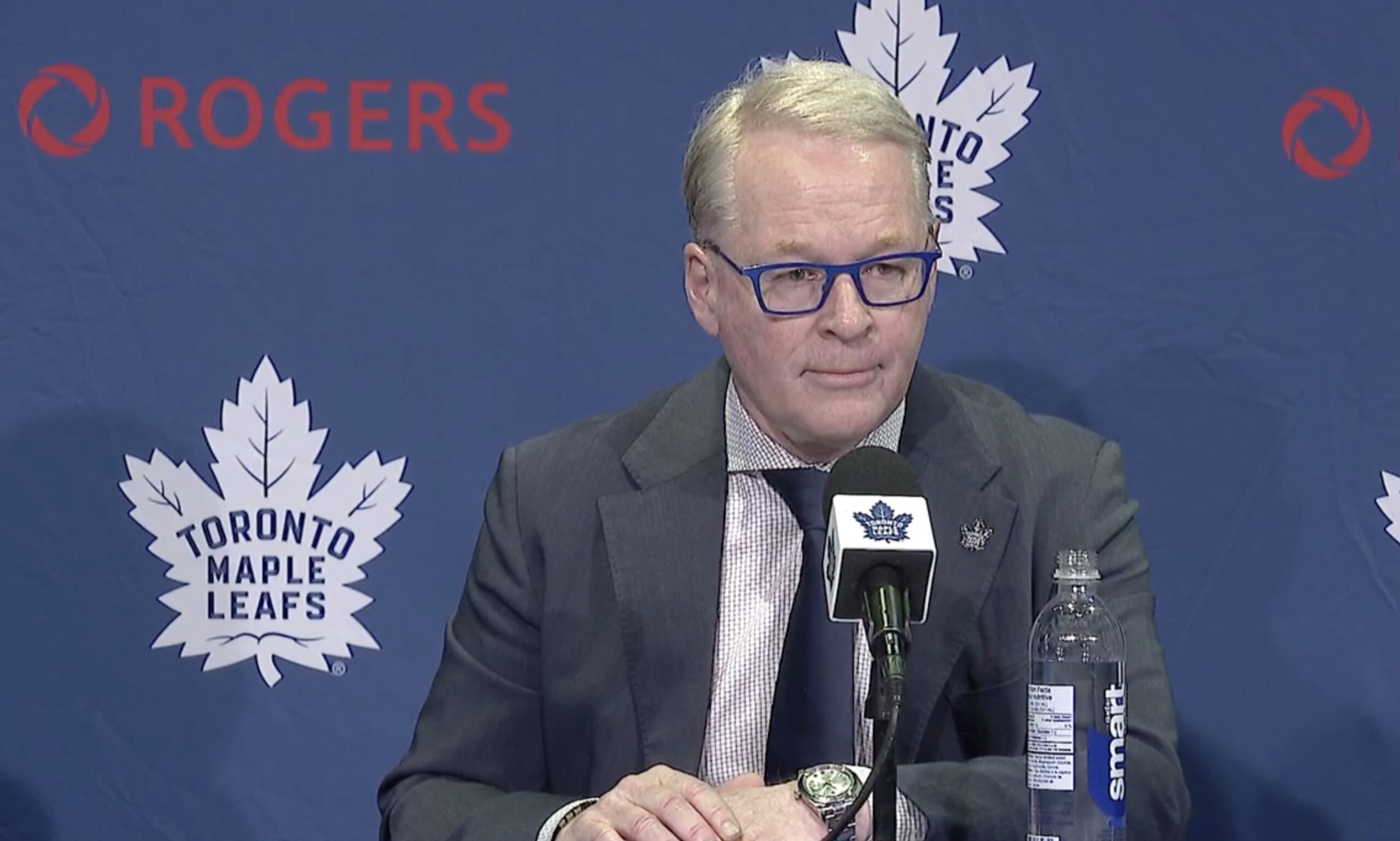
Steve Simmons put it on the table. He said he spoke to 20 people around the league, one supportive and 19 not, and relayed the words he said were used to describe Chayka. Pelley’s answer was not a rebuttal or even a coherent defence.
“I must have talked to different people,” he said.
That was it.
That is not leadership. That is a man trying to outlast a fire alarm by insisting the building passed inspection.
This is where Toronto is misunderstood by outsiders. People call it a hard market. It is not. It is a voluminous market. Most questions are not that sharp. The volume is what suffocates you.
Today, someone asked the sharp one. The surprise was not the question. The surprise was that Pelley looked unprepared for something that had been out there for days.
If you are going to hire John Chayka, you do not get to act offended by scrutiny. Scrutiny is the deal. This market has sat through a decade of press conferences where trust us was used as a substitute for results. It is over.
Chayka did what new hires are supposed to do. He acknowledged Arizona, said he learned from it, and framed his time away as perspective rather than absence. Fine. That is day one language.
The problem was never what Chayka said. It was what Pelley did not.
If Pelley believes Chayka is the right guy, he needed to explain the why in a way that felt specific and credible. What did you ask him. What did he own. What did you learn. Why does it matter. Why is this the right fit for this market, right now.
Instead, we got corporate fog.
Then came the second unforced error, the easiest one to avoid.
Structure.
Pelley went to great lengths at his last press conference to teach everyone about the importance of structure. Then he turned around and gave Toronto a muddled answer when asked who reports to whom and who makes the final decision.
It was not a hard question. It was the easiest one.
Here is the clean answer he should have delivered in one breath.
Chayka is the general manager. He reports to Pelley. He has the authority to lead hockey operations. Sundin reports to Chayka. The intent is collaboration, but Chayka is in charge and accountable.
That is it. That is the structure. It is not complicated.
Instead, the Leafs kept talking about collaboration and titles not mattering, which is exactly how you create ambiguity on day one in a market that has lived on ambiguity for a decade.
Ambiguity becomes an alibi.
And then the optics got worse after the press conference.
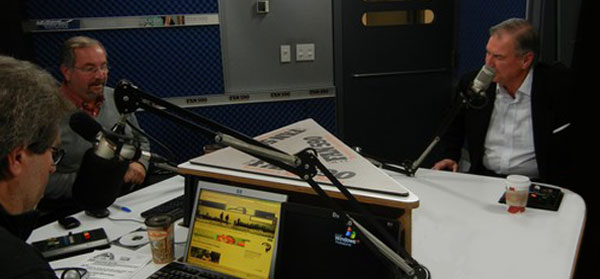
Chayka and Sundin went on Sportsnet 590 with Nick Kypreos, Justin Bourne, and Sam McKee and said two things that stood out immediately.
Sundin said he met Pelley about a year and a half ago and that Chayka’s name came up.
Chayka said they needed to deliver a vision and build an organization.
Those are not throwaway lines. They imply the relationship and the concept predated the search, as it was sold publicly. That may not mean the ending was predetermined, but it certainly feeds the perception.
If the Leafs want fans to trust their process, they have to be precise about the timeline. Vague answers leave room for people to connect the dots for themselves.
And the dots are everywhere.
Chayka is listed on the Sportsology Capital Partners website as an operating advisor in U.S. sports and sports analytics. The firm markets advisory services to ownership groups and major sports franchises across leagues.
That does not prove anything.
But it raises a fair question in light of Sundin’s comment about the timeline.
Was Chayka first on Pelley’s radar as a candidate or as a consultant pitching services?
Because those are two different origin stories.
And in this market, origin stories matter. Not because fans love corporate governance. Because Leafs fans have spent years being told there is a plan while watching the plan change every spring.
Multiple times, Chakya alluded to interviews with “Mr.Rogers”. Curious minds want to know if they broke bread while both appearing at the Ivey Sports Leadership Conference, where they were both speaking in January of this year.
Then there is the media strategy.
The Leafs’ first extended sit-down after the announcement was on a Rogers-owned radio station. Leafs social clips also flowed heavily through Rogers-owned channels, including Sportsnet personalities like Elliotte Friedman.
None of this is illegal. None of it is shocking. Rogers is the axis of the Leafs universe.
But if the organization is asking the public to buy transparency and structure, it is not a great look to appear to retreat into the company ecosystem the moment the questions get uncomfortable.
This is the reality of the modern Leafs. The same company that controls the team also controls much of the megaphone. That means the Leafs have to be even more disciplined in public, not less. Otherwise, every decision turns into a second argument about access and narrative management.
And it all circles back to the same thing.
This is not about whether John Chayka can do the job. He might be excellent.
It is not even about whether Mats Sundin can help. He might.
But Sundin is not universally adored in the way some people pretend. Some fans still hold grudges about the no-trade clause era. Others never connected with his personality the way they did with the blue-collar mythology of Gilmour, Clark, Tucker, Roberts, and that generation. So if the Leafs think his presence automatically buys goodwill, they are misreading their own market.
Which is why his role needs to be real. Not handshake and nostalgia. Real influence, clear reporting lines, clear authority, and no confusion about who owns the final call.
The Leafs can still make this work. But the first day was supposed to signal command and clarity. Instead, it signalled the opposite.
Pelley keeps telling people he understands the stakes and the need for structure, then shows up unprepared for the toughest question and muddies the simplest one.
That is not about the Toronto media being hard.
It is about leadership, looking surprised by Toronto.
And if this is what structure looks like on day one, Leafs Nation is right to be skeptical about what it looks like when the first real decision lands.

Born and raised in Toronto, Jonah Sigel is currently based in Seattle, WA. An avid sports fan, Jonah took to writing about the sports media world back in 2004 with two young kids at home, a new job and a return to Toronto. The interest grew and grew to include the former website Torontosportsmedia.com, the twitter handle @yyzsportsmedia, the PressRow podcast and now the all new yyzsportsmedia.com